
Comparison
GFRP rebar versus TMT steel
Engineers ask for this table before they ask for a rate. GFRP wins on corrosion and weight. It loses on stiffness and on the habit of bending bars in the yard. It is not a silent substitute. A longer note is in the GFRP versus TMT guide.
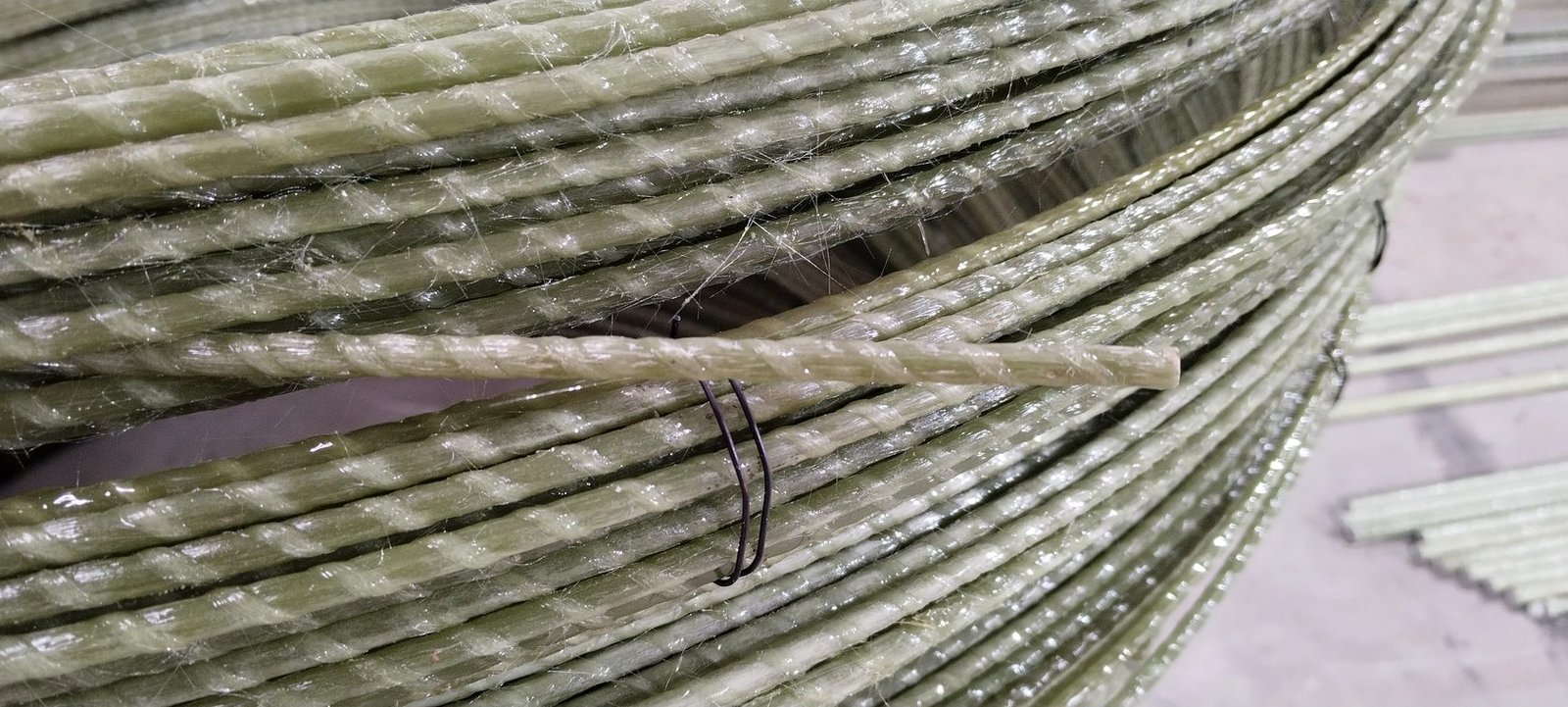
| Property | TMT steel | GFRP rebar |
|---|---|---|
| Corrosion | Rusts in chloride, moisture and many chemicals | No rust mechanism. The bar is glass and resin |
| Unit weight | About 7.85 t/m³. 12 mm ≈ 0.89 kg/m | About a quarter of that. Our 12 mm bar is 0.250 kg/m |
| Tensile behaviour | Yields (Fe500 / Fe550 class). Ductile | High tensile along the fibre, then brittle. No yield plateau |
| Stiffness | Modulus about 200 GPa | Much lower, often cited near 40–60 GPa. Deflection governs |
| Magnetism | Magnetic | Non-magnetic |
| Electricity | Conductive | Non-conductive |
| Bending | Bent on site | Not bent on site. Shapes are a factory decision |
| Design code habit | IS 456 and IRC steel practice | FRP rules. In India, see IRC:137-2022 for roads and bridges |
Ranges such as modulus are typical published GFRP values, not a Trumbak lot certificate. Our own unit weights are on the products page. Ask for the test report that matches the bars you are buying.