
Manufacturing
How the bar is made at Changodar.
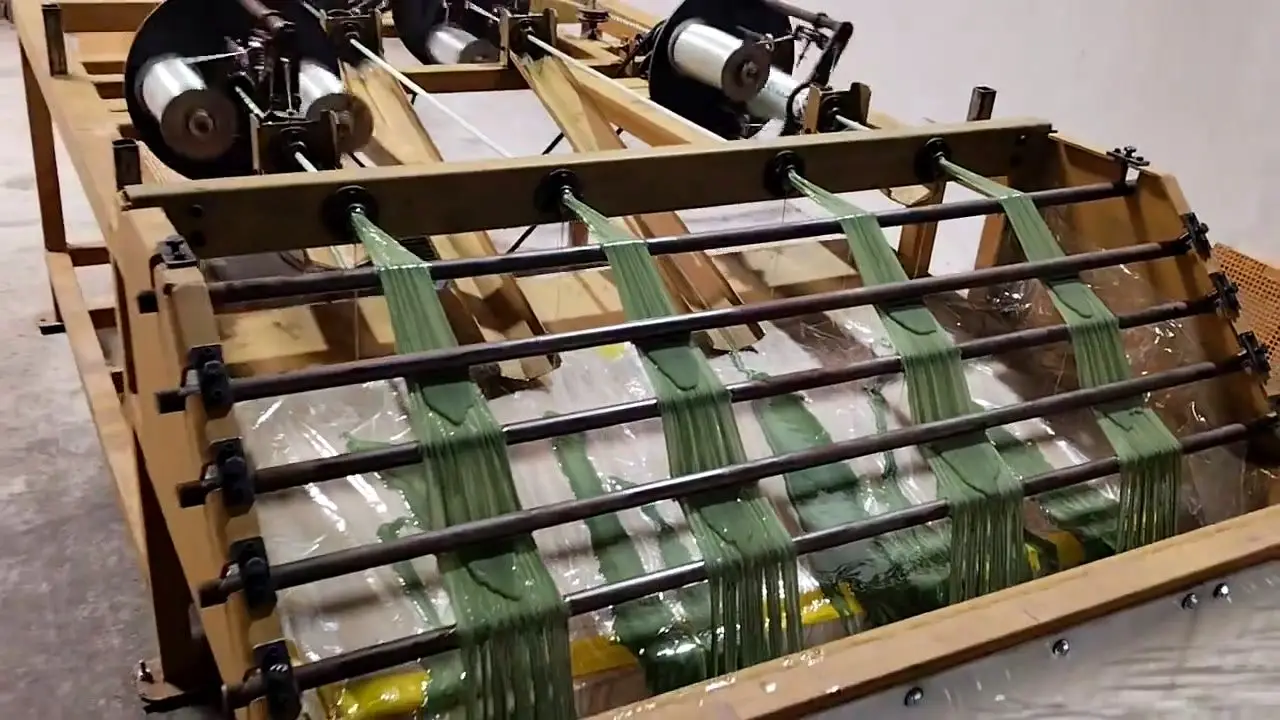
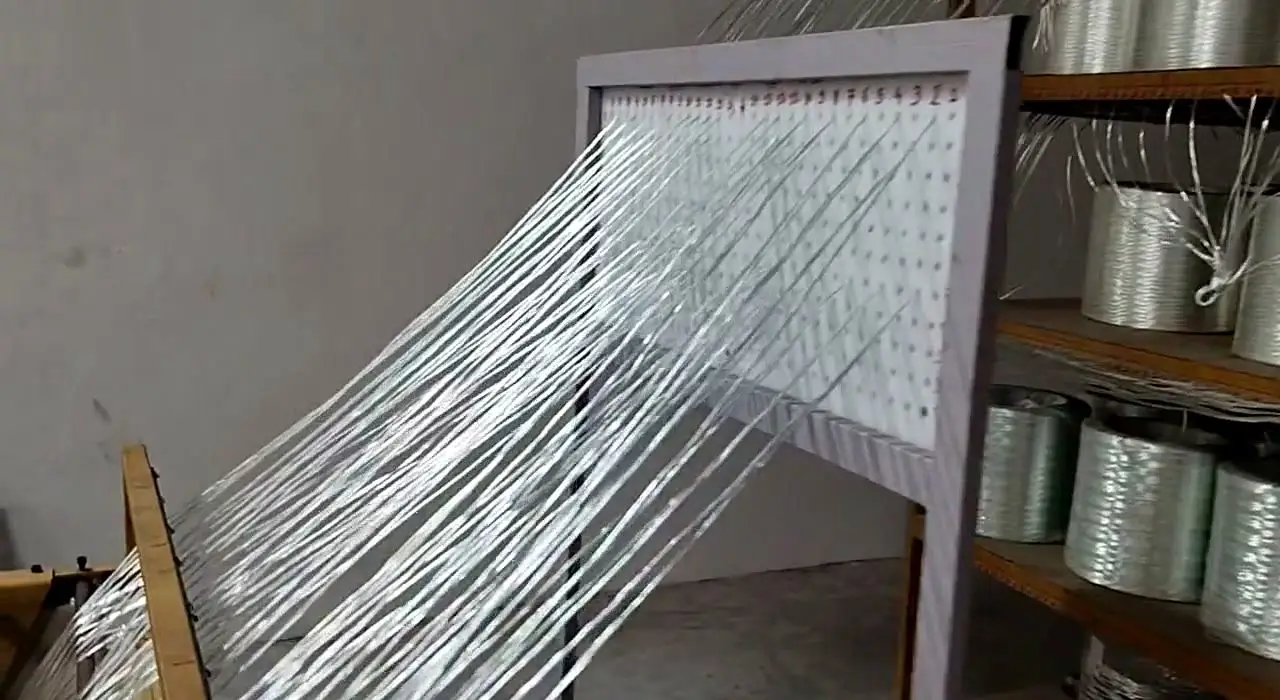
Glass is aligned, impregnated with resin and given a helical rib, all on one continuous line at this plant. The process is pultrusion: the section is pulled, not extruded, so the fibres stay straight.
01
Creel and alignment
Continuous E-glass rovings leave the creel under controlled tension and enter the line aligned with the axis of the bar.
02
Resin impregnation
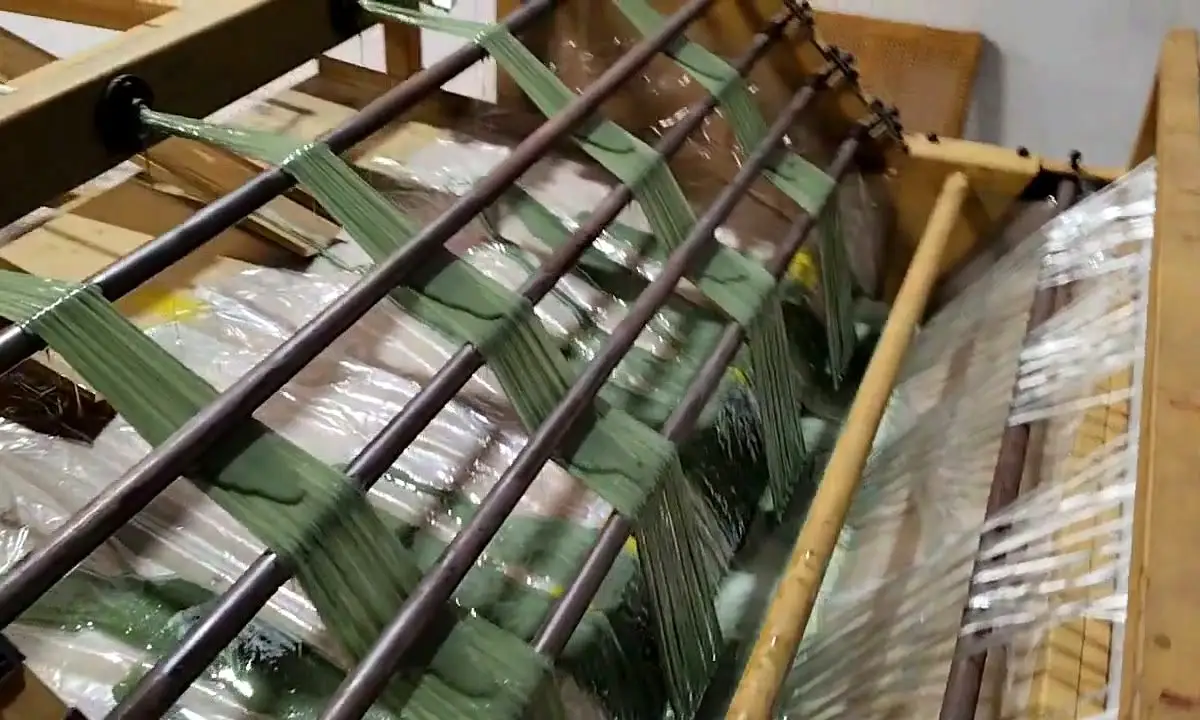
The fibre bundle is wetted with vinyl ester or epoxy resin so the matrix surrounds the glass before the section is formed.
03
Helical rib
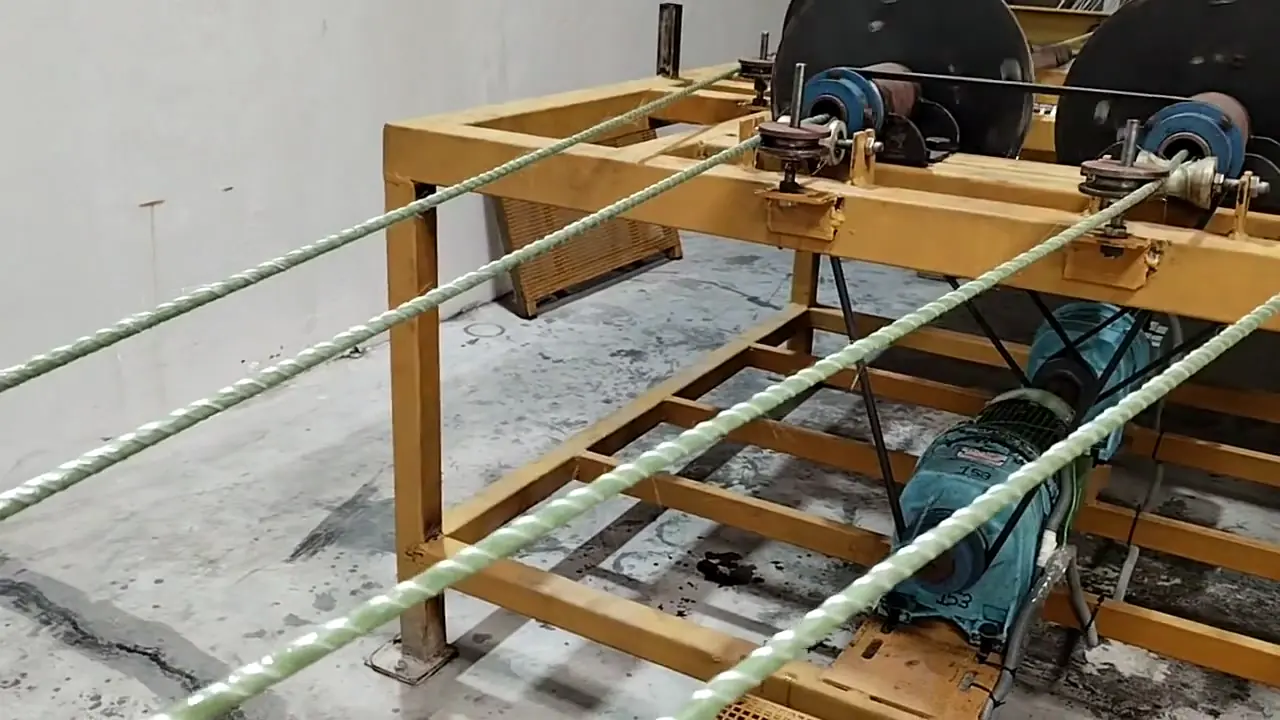
Winding heads apply a spiral rib as the bar is pulled. That rib is the bond surface with the concrete.
04
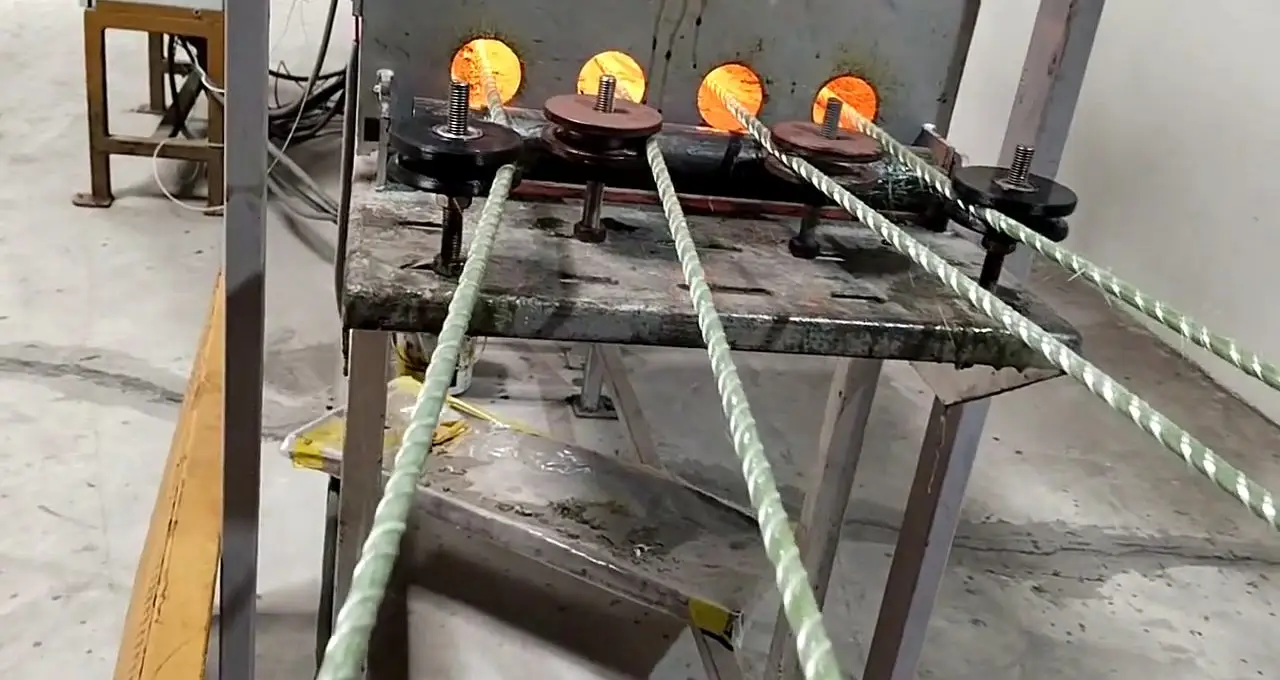
Heated cure
The wet bar passes through heated tunnels so the resin cures at a controlled diameter.
05
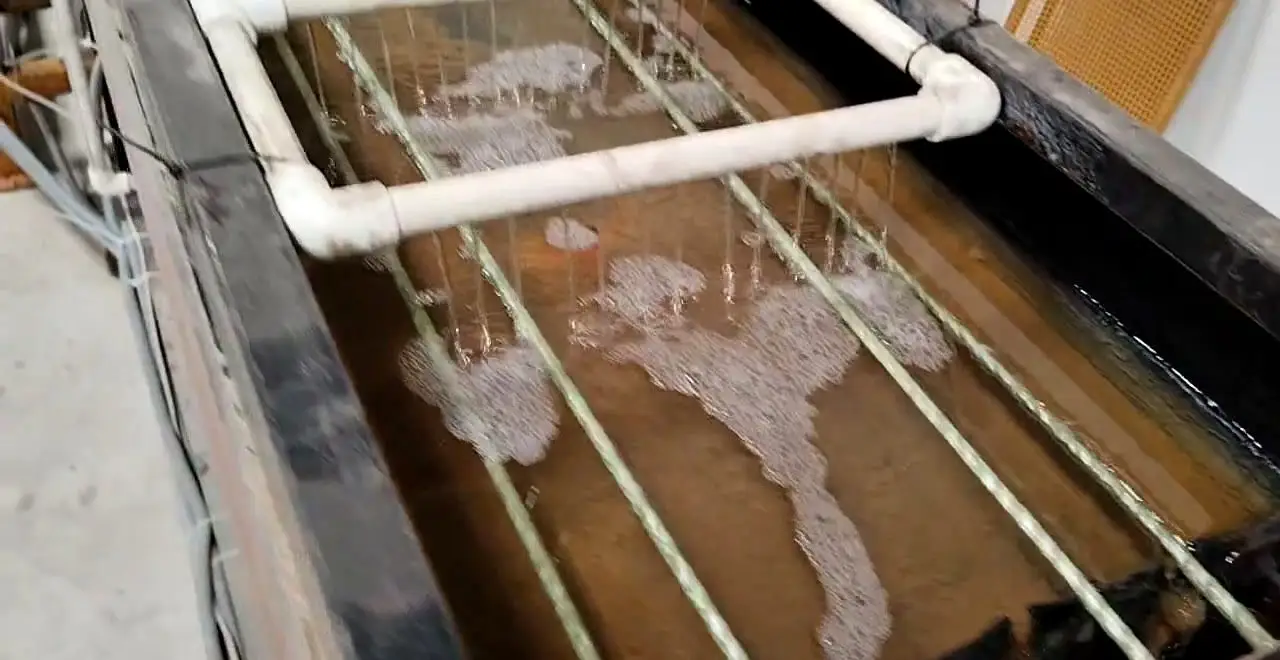
Cooling
After cure, the bar runs through a water trough before it is handled.
06
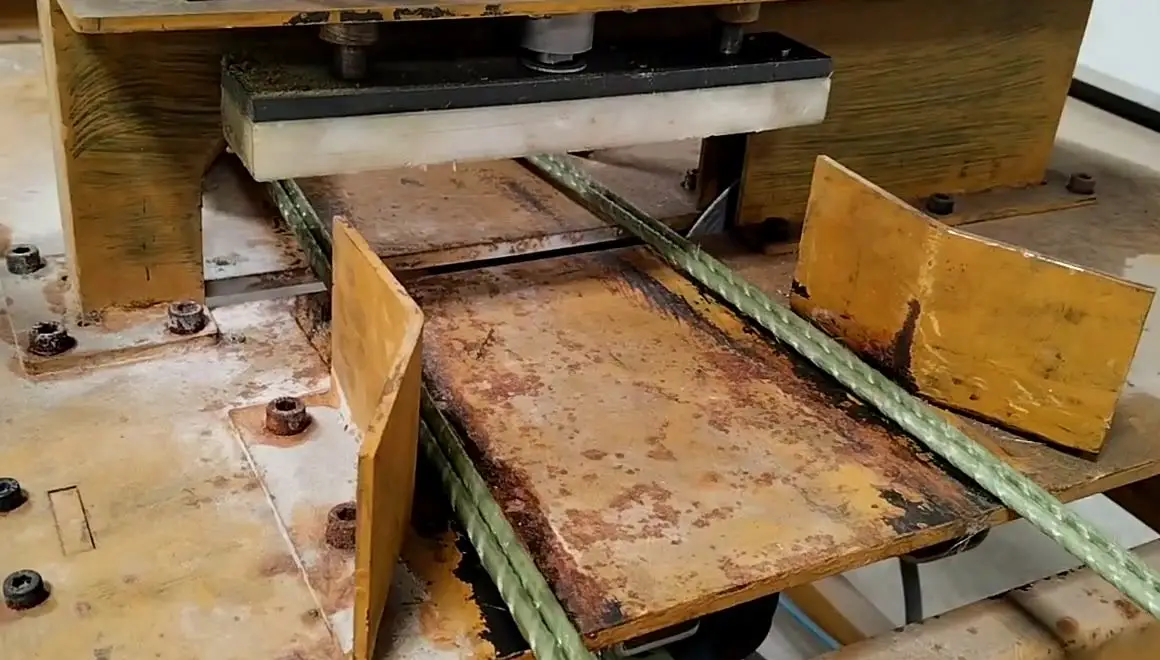
Cut to length
A saw cuts straight lengths. This line does not form bends. Any shaped bar has to be agreed before production.
Before you design
What the material will and will not do.
- Strength is along the glass. Unlike steel, the bar does not yield before it ruptures.
- It is less stiff than steel, so deflection and crack width often govern the design.
- It is not bent on site. Any bent shape has to be fixed before the bars are made.
- The bar is non-magnetic and does not conduct electricity.
A longer comparison is on the GFRP versus TMT page. Handling limits are in the technical notes.
Speak to the plant about a specification.
Send the drawing or the bar-bending schedule. We will confirm which diameters and lengths this line can supply.